

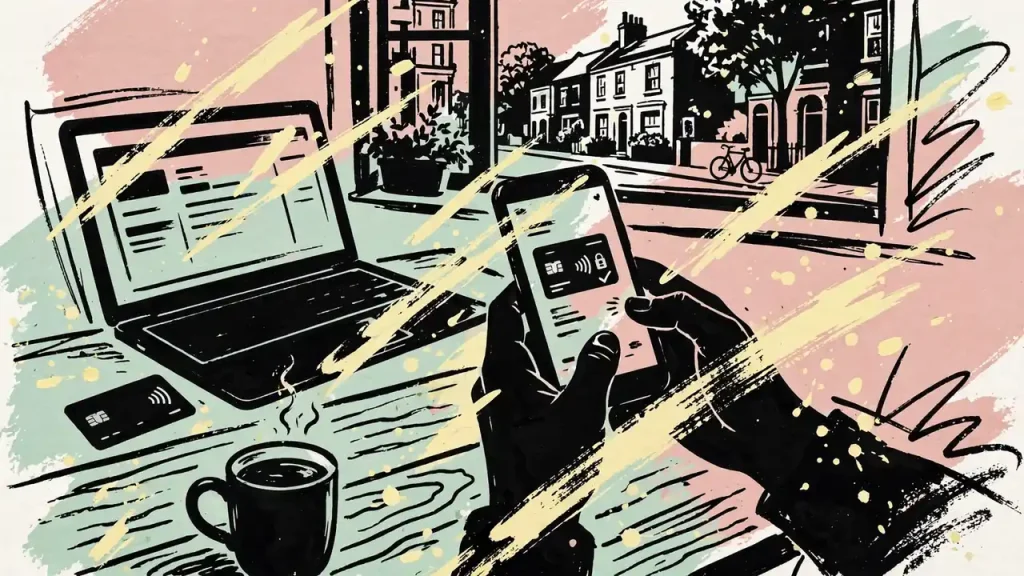
Wallet support, deposit and withdrawal rules, fees and return-to-source requirements can differ between UK casino cashiers.
Which e-wallets and payment routes UK casinos may accept
When you look for casinos that accept e-wallets in the UK, it helps to separate the payment methods into distinct groups. An e-wallet is not the same as a debit card, a bank transfer or a prepaid voucher, even though all of them may appear together in a casino cashier.
An e-wallet holds or routes money through a separate payment account. PayPal, Skrill and Neteller are the clearest examples for UK players. You fund the wallet separately, then authorise the casino deposit through that account instead of entering your card details directly on the gambling site. Some casinos may also display Payz, the name adopted after EcoPayz was rebranded in 2022.
Skrill remains a prominent deposit option among UK-facing casino sites in 2026, according to a specialist review. That does not mean every casino supports it, or that the same conditions apply to every customer. Neteller and Skrill are both found at some sites, while a specialist review says promotions often exclude deposits made through these wallets. PayPal is also described as a popular choice for speed and convenience in a specialist review, although that same type of source notes that bonus eligibility can differ when PayPal is used.
Jeton has a more limited presence. A specialist review identifies it at a small number of UK online casinos in 2026, so it is better treated as a possible niche option than as a standard feature of every cashier. A wallet appearing in a general payment guide does not, by itself, establish that it is available for your account.
Casinos That Accept Giropay in the UK
How e-wallets differ from other payment routes
Debit cards are a separate category. UK casinos commonly accept debit cards issued on Visa or Mastercard networks. With this route, you enter the card details or select a saved card through the cashier, rather than paying from a standalone wallet. Visa and Mastercard may therefore be listed beside Skrill, PayPal or Neteller, but they do not work in the same way.
The fact that a card carries a familiar network logo is not enough to establish current eligibility. The actual card product and the cashier’s live settings matter. Credit-card payments for gambling are not accepted by UK-licensed casinos, and a payment service cannot be used to bypass that restriction where it permits credit-card funding for gambling.
Bank transfers move money from your bank account to the remote gambling licensee, rather than through an e-wallet balance. Open banking can make this feel more like a direct account-to-account payment: you select your bank, authorise the transaction and return to the casino. Trustly is one payment service associated with this type of route. A specialist review reports that open banking and bank transfers can provide instant deposits and fast withdrawals at many sites, but that description should not be treated as a universal feature of every cashier.
Apple Pay is another route you may encounter. Some UK Gambling Commission-licensed casinos accept it for deposits. It uses a payment account or card already set up in Apple’s service, so it sits between a traditional card presentation and a separate wallet experience from the player’s point of view. Its appearance in one cashier does not establish that every Apple Pay card or every transaction type will be supported.
E-wallets
PayPal, Skrill, Neteller, Payz and Jeton.
Debit cards
Visa and Mastercard debit cards.
Bank-based routes
Bank transfer and open banking services like Trustly.
Mobile & Vouchers
Apple Pay and Paysafecard.
Prepaid services are different again. Paysafecard is a voucher-based method intended for deposits. You enter the voucher details rather than authorising a direct bank or card payment. It should not be grouped with wallets that might be available for more than one transaction direction: Paysafecard is deposit-only.
Other routes you may see
Some casino cashiers also display cryptocurrency payment options. Crypto is not a conventional e-wallet or a bank payment, and the cashier may apply separate account, transaction or verification conditions.
The practical categories can therefore look like this:
- E-wallets: PayPal, Skrill, Neteller, Payz and, at a smaller number of sites, Jeton.
- Debit cards: Visa and Mastercard debit cards.
- Bank-based routes: bank transfer and open banking services such as Trustly.
- Mobile payment: Apple Pay at some UK Gambling Commission-licensed casinos.
- Prepaid vouchers: Paysafecard for deposits.
- Cryptocurrency: Bitcoin and other digital-asset options shown by some casino websites.
This range explains why descriptions of online casinos with e-wallets can be misleading when they present every payment logo as interchangeable. A wallet may require its own account, a card route may depend on the card product, and a bank-based payment may be handled through a separate authorisation screen. A prepaid voucher has a different function again.
Before treating any method as suitable, distinguish between a payment brand being mentioned somewhere on a casino site and that method being available to you. Also check whether the cashier supports the transaction direction you need. The presence of PayPal, Skrill, a bank-transfer logo or another wallet name is an indication of a possible route, not a promise that the same option will be enabled for every UK customer.
Recommended online casinos
- SlotoSportBonus: 500% up to £ 10 200+ 777 FS · Payout speed: 1-3 business days
- AmunbetBonus: Join now and get 450% up to 2,700 GBP + 450 FS · Payout speed: 1-3 business days
- WinBeastBonus: €5000 + 500 FS + €650 Freebet · Payout speed: 1-3 business days
- ChanzeBonus: Slots Welcome Bonus #1 200% up to €500 · Payout speed: 1-3 business days
- x3betBonus: Welcome Pack 100% Up to £1.000 + 200 Free Spins · Payout speed: 1-3 business days
- DieselwinBonus: Welcome Pack 250% up to £4000 + 200 FS · Payout speed: 1-3 business days
- NightLuckBonus: Welcome Pack + 805% Up To 6400€ + 280 FS · Payout speed: 1-3 business days
Check what the cashier actually supports
A payment logo on a casino’s homepage is not the same as a payment option available to you. When you are comparing an e-wallet online casino in the UK, treat the cashier as the decisive place to check support. The cashier is connected to the account, the selected country and the payment services available at that moment. A general payments page can provide useful orientation, but it should not replace this final check.
Open the deposit screen after registering, completing the required account details and signing in. Look for the actual payment buttons rather than relying on a banner, an old review or a logo in the footer. The available selection should make clear which route you can choose and whether the method is enabled for your account. If a wallet is mentioned elsewhere but does not appear in the cashier, do not assume that entering its details manually will work.
Casinos That Accept iDEAL in the UK: Payment Checks
Why a general payment list can mislead
Payment information is often written broadly. A casino may describe cards, bank services and e-wallets together, while the cashier presents only a smaller selection to a particular customer. This can happen because payment support is not identical across every account or every access route. It can also change as the remote gambling licensee updates its payment arrangements.
A specialist review may list Visa and Mastercard among the available options, but that does not confirm that every UK customer can use every card product. Check the live cashier for the current UK availability and the card type accepted for your account. The same principle applies to a wallet or bank service: a familiar name elsewhere is not proof that it is enabled when you are ready to deposit.
This is why a long e-wallet casino list can be less useful than a short, current check. The number of logos tells you little about whether the specific route is available to you. What matters is the combination of the casino, your account and the payment method shown at the point of payment.
Check the method, not just the brand
Payment brands can cover different products and payment flows. Seeing a card brand does not automatically tell you which card products are eligible. Seeing a wallet name does not tell you that every way of funding that wallet will be accepted by the casino. Read the wording beside the button and any information displayed when you select it.
DO
- Check the live cashier for current availability
- Read the specific wording beside the payment button
- Confirm the transaction direction (deposit or withdrawal)
DON’T
- Assume a logo in a footer means it is available to you
- Rely on old reviews or general payment banners
- Assume all wallet funding methods are treated the same
Pay attention to whether the cashier describes the route as a deposit option, asks you to log in to the provider, or sends you to a separate authorisation page. These details help confirm that you are using the intended service rather than an unrelated card or bank route. If the screen produces an error before you can complete the transaction, stop and check the casino’s payment help page or customer support rather than repeatedly submitting the same request.
Some UK Gambling Commission-licensed casinos accept Apple Pay for deposits. That does not mean Apple Pay will appear at every UK casino, or that it will be available to every customer. If you prefer to use Apple Pay, look for its button in the signed-in cashier. Do not treat support at one site as evidence of support at another.
A practical pre-deposit check
Before selecting an e-wallet casino site, work through the cashier in this order:
- Confirm the account location. Make sure the account is set up for the UK market and that the payment page is showing the UK version of the service.
- Open the deposit methods. Do not rely on the casino’s front page, a comparison table or an old payment badge.
- Find the exact method. Check whether the e-wallet, Apple Pay option, card route or bank service is displayed as a selectable button.
- Read the accompanying conditions. Look for instructions about the provider account, accepted card products and any eligibility wording.
- Check the final payment screen. Before authorising anything, confirm that the selected method and account details match what you intended to use.
- Ask support if the information conflicts. A clear question about the live cashier is more useful than relying on a general statement that the casino accepts e-wallets.
This check is particularly important when comparing an e-wallet online casino site with another operator. Two casinos may mention the same wallet while offering different payment selections in their cashiers. One may show the wallet directly; another may show only cards or bank services. Neither presentation should be generalised across the market.
Do not confuse visibility with compatibility
A method can be visible without being suitable for your particular transaction. The cashier may display a service that requires a separate account, a matching account identity or a compatible payment product. Those requirements are part of compatibility, not evidence that the casino has failed to accept the brand.
Use the displayed instructions as the starting point. If a method disappears after you sign in, if the button is greyed out, or if the provider rejects the connection, regard that as a sign to verify support before proceeding. Avoid choosing a different route simply because it is the only button left without understanding why your preferred option is unavailable.
There is no reliable universal list of the best e-wallet online casinos for every UK player. The more useful comparison is whether the cashier currently shows the payment route you want, with instructions you can follow and terms that match your account. That small check can prevent an unnecessary failed deposit and keeps your choice based on the service actually offered to you, rather than on a generic payment claim.
Deposits and withdrawals may follow different rules
Finding an e-wallet listed in a UK casino’s deposit cashier does not automatically mean that the same wallet can receive your withdrawal. Payment methods can have separate rules for adding money and taking money out. The deposit screen may therefore offer more routes than the withdrawal screen.
Attention A method available for deposits may not be supported for withdrawals. Always check the withdrawal section before committing funds.
This matters when you are comparing casinos that accept e-wallet deposits in the UK. A site may let you fund your balance through an e-wallet, yet direct a later payout to another permitted route, return it to the original source, or ask for additional checks before approving an alternative. The important detail is not simply whether a wallet appears somewhere on the website. It is whether that method is supported in both directions for your account.
Deposit access is not withdrawal access
Casinos often present payment methods in separate parts of the cashier. A wallet can be available under “Deposit” while absent from “Withdraw”. That difference may reflect the casino’s payment arrangements, the provider’s rules, or the information available for checking the transaction.
You should therefore open the withdrawal section before paying in, rather than assuming that a familiar wallet works both ways. If the cashier shows only deposit support, treat the method as deposit-only unless the operator clearly confirms otherwise. This is particularly important if you intend to leave a balance in the account until you have checked how a successful withdrawal would be handled.
Casinos That Accept USDC in the UK: What to Check
The same principle applies to other payment routes. A card, bank account or wallet may be accepted for funding but have a different process for receiving money. The casino may also display different choices after you sign in, because payment availability is connected to your account rather than being identical for every visitor.
Why casinos may send funds back to the original source
UK anti-money laundering controls commonly require a payout to be returned to the payment source used for the deposit. This is part of the closed-loop approach to transactions: money should not move freely between unrelated payment instruments without a reason that can be checked.
For example, if you deposit through an e-wallet, the casino may first expect the withdrawal to go back to that same wallet. If several methods were used, the cashier or support team may need to determine how the payout is divided or which source must be used first. The exact handling belongs to the operator’s payment terms and the information recorded on your account.
UK anti-money laundering controls often require payouts to be returned to the original payment source used for the deposit.
This requirement is not the same as a promise that every deposit method supports withdrawals. The original-source rule explains where a payout may need to go when that route is available; it does not turn a deposit-only method into a cash-out method.
An alternative route may still be possible, but it can require extra verification. You might be asked to confirm ownership of the account, provide transaction details, or complete other KYC checks before the casino releases funds through a different channel. Do not regard such a request as a reason to keep trying random payment methods. Check the cashier instructions and ask support which route is acceptable for your particular deposit history.
Check the position before making a deposit
Before choosing among online casinos that accept e-wallet deposits, make three checks in the cashier:
- Is the e-wallet shown for deposits?
- Is it also shown for withdrawals?
- Does the withdrawal policy require funds to return to the original payment source?
Keep a record of which route you used and the account details connected with it. That makes it easier to identify the relevant source if you later need to withdraw, especially after using more than one method.
A withdrawal request may also go through the casino’s internal approval process before it is sent to the payment provider. A specialist review notes that first withdrawals can take longer while verification is completed. That point concerns approval and checks, not the underlying rule about where the money must be sent.
The safest assumption is simple: a deposit option is not automatically a withdrawal option. Confirm the two functions separately, understand the return-to-source requirement, and only then choose the route that fits how you expect to fund and withdraw from the account.
How payment routes affect deposit and payout timing
The payment method you choose can affect two separate points in the transaction: when the deposit reaches the casino balance and when an approved withdrawal reaches your account. A route that appears instant at the cashier may not provide an equally quick payout, because withdrawals can involve internal checks before the payment provider receives the instruction.
Deposits: the first movement of money
Open banking and bank-transfer services can offer instant deposits at some UK casino sites. This is useful when the payment is authorised immediately and the casino updates your balance without a manual review. The timing still depends on the connection between the banking service and the cashier, so an option described as fast should be checked at the point of payment rather than treated as a universal promise.
Casinos That Accept Revolut in the UK: Payment Guide
A debit-card deposit may also appear in the casino account quickly. However, the speed of the initial transaction says little about the later withdrawal stage. A card payment can be instant while the payout takes several business days, because the casino may need to approve the withdrawal and complete any outstanding KYC checks first.
This difference matters when comparing e-wallet payment casinos in the UK. An e-wallet may be convenient for funding an account, but the relevant timing question is whether the operator processes withdrawals to that route promptly after approval. The cashier’s deposit screen alone cannot answer that.
Withdrawals: approval comes before delivery
Withdrawal timing normally has an internal stage and a payment-provider stage. The casino first reviews the request, and the process can take longer for a first withdrawal while verification is completed. If the account is not fully verified, the payment may remain pending even when the selected route is capable of sending funds quickly.
A specialist review places PayPal, open banking services and debit cards connected to fast payout systems among the quicker withdrawal routes. That is a comparison of payment-route capability, not a guarantee that every casino using one of these methods will process a request at the same pace. The operator’s approval procedure remains part of the overall wait.
This is why a search for top e-wallet casino sites in the UK should not be based on the deposit screen alone. Look for the stated withdrawal processing stage, whether KYC is required before the first payout, and whether the method is presented as available for withdrawals as well as deposits. The fastest route on paper can still be delayed by an unresolved account check.
Withdrawal Timing
Withdrawal speed depends on both the casino’s internal approval and the payment provider’s processing speed.
Bank transfers and the banking timetable
Bank transfers require attention to the bank’s timetable as well as the casino’s processing time. A specialist review notes that delivery can be affected by the provider’s cut-off times, weekends and currency conversion. A request made after a daily cut-off may move into the next processing window, while a weekend can prevent normal banking movement until the next working period.
Open banking may reduce some of this waiting for deposits because the payment is authorised directly through a bank connection. Some sites also describe open banking and bank transfers as supporting fast withdrawals, but this remains dependent on the particular operator and the route shown in its cashier. The word “instant” should therefore be read as describing a possible payment stage, not the complete journey from withdrawal request to money received.
For e-wallet deposit casinos in the UK, compare the full sequence: authorisation, casino approval, verification and provider delivery. Keeping these stages separate gives you a more realistic view of timing than calling one method simply “fast”. A quick deposit can coexist with a slower payout, while a bank-based route may be affected by cut-off times even after the casino has released the funds.
Casinos That Accept UKash in the UK: Payment Checks
Compare the full cost, not just the visible fee
A payment method can look inexpensive because the cashier shows no separate charge. That does not necessarily make it the cheapest route for your transaction. The final cost may be divided between the casino, the payment provider, your card issuer or bank, the currency conversion process and the payment network.
A practical comparison starts with the amount you intend to deposit or withdraw. Check whether the casino adds a transaction fee, then look at the provider’s own charges. Your bank or card issuer may apply a separate fee, while the payment network can add another cost that is not displayed by the casino. Treat the complete amount leaving your account, or the amount reaching it, as the figure to compare.
Where the cost can appear
A cashier may describe a payment as free while another part of the chain charges for processing. Review these points before confirming:
- Casino charge: the remote gambling licensee may apply a fee to a particular payment route or transaction.
- Provider charge: an e-wallet or banking service may set its own deposit, withdrawal or conversion pricing.
- Bank or issuer charge: your bank or card issuer can apply fees that do not appear in the casino cashier.
- Exchange-rate spread: converting between currencies can reduce the amount received even when no flat fee is shown.
- Network cost: the payment network may add a processing cost that is passed through directly or reflected in the exchange rate.
This makes a simple “fee-free” label incomplete. A specialist review can identify the main categories of payment cost, but the charge that applies to you depends on the route, currency and transaction amount. Read the current terms shown by the relevant services rather than relying on a general comparison.
Compare like with like
Use the same transaction amount when checking different methods. Record the amount you send, every stated charge and the amount credited to the casino account. For a payout, record the amount requested, any deduction and the amount that arrives in your bank or wallet. This exposes costs that are easy to miss when you look only at the casino’s fee column.
Pay particular attention to currency conversion. A percentage-free or flat-fee-free route can still be costly if its exchange rate includes a wide spread. A conversion spread may exceed a visible fixed charge, especially when the transaction is larger. Compare the rate applied with the rate you would expect for the same currency exchange, and include any bank or provider conversion charge in the calculation.
Hidden Costs
Total costs can include casino transaction fees, provider charges, bank/issuer fees, currency exchange spreads, and network costs.
There is no single payment method that is cheapest for every UK casino customer. The result depends on the actual amount, the casino’s pricing, the provider’s terms, the currency used and any network cost. The most reliable comparison is therefore not a ranking of e-wallets, but a transaction-specific check of the total sent and the total received.
Keep payment ownership details consistent
When you use e-wallet casinos in the UK, the payment account should belong to the same person who holds the gambling account. Matching ownership details give the remote gambling licensee a straightforward transaction record: your casino profile identifies you, and the named payment route points to the same customer.
That consistency can reduce avoidable friction. If the gambling account is registered in your name but the e-wallet belongs to somebody else, the operator may need to clarify who controls the funds and why the accounts do not match. A similar issue can arise when a payment route is registered with different personal details from those on the casino account. Even where there is an innocent explanation, the mismatch can make an otherwise routine transaction harder to process.
Casinos That Accept eCheck in the UK: How to Verify
The cleanest arrangement is often one named account used consistently for both funding and receiving money. For example, if you choose an e-wallet for UK players, use your own verified wallet rather than a relative’s, a partner’s or a friend’s account. Do not treat access to another person’s wallet as proof that you are entitled to use it. Permission to log in is not the same as matching account ownership.
Before making a transaction, check the name shown in your casino profile and the name attached to the payment account. Keep other basic account details consistent as well, and update the operator if your information has changed. A difference caused by a genuine change of details is easier to explain when the account records are current than when it appears without context.
This approach applies beyond e-wallets. The same principle matters when you use a debit card, bank account or another payment route displayed by the cashier. Selecting a method because it is available is not enough; it should also be connected to you personally.
For e-wallet casinos for UK players, ownership is therefore part of payment preparation, not an afterthought. Choosing a payment account in your own name and using it consistently keeps the basic identity trail clear. It does not replace any checks the operator may carry out, but it avoids creating a preventable question about who made the payment or who should be associated with the casino account.
Credit Card Ban
Credit-card payments for gambling are prohibited at UK-licensed casinos. This includes using services to bypass the restriction.
Check deposit minimums and account limits before paying
Before funding an account, check two separate figures in the cashier: the smallest payment the selected method will accept and the largest amount the account will permit. They are not interchangeable. An e-wallet may have a different minimum from a debit card, while the maximum can depend on the method, the account and the operator’s current controls.
A specialist review places the starting deposit range at £10–£20, depending on the payment method. Treat that as a guide rather than a fixed rule for every casino accepting e-wallet deposits in the UK. The relevant amount should be visible when you select the wallet or other payment route. If the cashier rejects a smaller payment, increasing the amount may resolve the issue, but it is better to see the requirement before confirming the transaction.
The upper boundary needs the same attention. A specialist review notes that maximum deposits may be set per transaction, per day or per month, and can vary according to both the chosen payment method and your account status. A limit shown for one wallet therefore does not establish the limit for another. Nor should a limit available to an established account be assumed to apply immediately to a new one.
Account-level limits are a separate protection from the cashier’s payment limits. UK Gambling Commission rules require remote gambling licensees to ask new customers to set a financial limit before making their first deposit. The account must also provide accessible controls for managing those limits later. Take that prompt seriously: it gives you a chance to decide the amount you are prepared to deposit before money is sent, rather than reacting to a payment screen.
Casinos That Accept Tether in the UK: What to Check
When comparing UK casinos that accept e-wallet deposits, look for the limit-setting tools in the account area as well as the payment figures in the cashier. Check whether the displayed control concerns deposits and whether it applies across the account, rather than assuming that a wallet’s own restrictions are the same as the casino’s financial controls. Keep the selected deposit amount within both the payment method’s permitted range and the limit you have chosen for the account.
A prepaid voucher is not a withdrawal method
Paysafecard is a prepaid voucher designed for deposits, not withdrawals. That distinction matters when you are comparing payment routes at UK casinos, because the presence of a method in the deposit cashier does not mean it can also receive a payout.
With Paysafecard, you buy or hold voucher value and use it to add funds to the casino account. Any balance you later want to withdraw must be handled through a separate route supported for payouts. Do not treat the voucher as an e-wallet account that can receive money back from the casino.
This is why a payment page should be read in two parts: the deposit options and the withdrawal options. A Paysafecard logo under “Deposit” tells you what can be used to fund the account; it does not confirm that the same method is available when you request a cashout. Looking only at the first list can leave you expecting a withdrawal route that does not exist.
The practical point is simple: include Paysafecard in your comparison when you need a deposit-only option, but plan the payout separately. Before adding funds, identify how withdrawals are handled and whether the cashier presents a suitable method for receiving them. That keeps the role of the prepaid voucher clear and avoids confusing it with e-wallets that may appear in both payment menus.
Final Summary
- Verify that your casino account and payment account share the same ownership details.
- Check both minimum deposit amounts and account-level financial limits.
- Distinguish between deposit-only methods like Paysafecard and dual-purpose wallets.
If you specifically want one named account to manage money in both directions, Paysafecard should not be treated as fulfilling that role. It is a way to pay in, and nothing about its deposit function should be read as evidence that it can be used to cash out.
Credit cards cannot fund gambling on UK-licensed sites
Credit-card payments for gambling are not permitted at UK-licensed casinos. The regulator introduced the ban on 14 April 2020, and it remains in force. The rule applies to direct card deposits as well as arrangements designed to route credit-card funds into a gambling account through another payment service.
This matters when you are comparing e-wallets for online casino deposits. An e-wallet is not automatically acceptable simply because it appears in a cashier or can hold money. UK remote gambling licensees cannot accept wallet payments where the wallet allows credit-card funds to be used for gambling. In practice, the funding source behind the wallet matters, not only the name of the payment method shown at checkout.
A debit card is a different payment route from a credit card, and UK casinos commonly distinguish between Visa and Mastercard products accordingly. However, the card type and eligibility still need to be confirmed in the cashier before you pay. A card bearing a familiar brand is not enough to establish that the transaction is permitted or supported for your account.
Do not try to work around the restriction by moving credit-card funds through a money service business or another intermediary. Credit-card payments for gambling remain prohibited when routed in that way. If a payment option is unclear, stop before confirming the deposit and check the operator’s payment terms or ask customer support to identify the permitted funding route.
For a UK player, the practical question is therefore not simply whether you can use an e-wallet at an online casino. You also need to know whether the balance was funded in a way that the remote gambling licensee may accept. Use a payment source that complies with the restriction, rather than relying on an indirect route to make a card-funded deposit.
Casinos That Accept POLi in the UK: Payment Checks
Confirm currency and return-to-source requirements
Before making a first payment to an online casino, check the currency attached to your account. A specialist review reports that GBP is supported on the relevant pages, but that does not remove the need to confirm your own account settings. If the account is set to another currency, a deposit or withdrawal may involve conversion rather than being processed directly in pounds.
This matters when you use online casino e-wallets in the UK. The wallet itself may hold one currency while the casino account uses another. Checking the currency shown in the cashier and account details before confirming a transaction can help you spot a mismatch in advance. It also gives you a clearer view of what the transaction is intended to do, instead of discovering the issue after money has moved.
You should also expect the casino to examine where a withdrawal is being sent. Returning funds to the original payment source is a common anti-fraud and anti-money-laundering control. In practice, this means that a deposit made through a particular wallet, card or bank route may be expected to follow the corresponding return path, subject to the cashier’s available options and the operator’s checks.
Do not assume that an alternative destination will be accepted simply because it is convenient. If the original source cannot receive the funds, the casino may ask for additional verification before considering another route. That can involve checking transaction details or confirming that the requested destination is connected to the same customer.
Before depositing, review the account currency and note which source you are using. Keeping those details clear from the beginning makes it easier to understand any return-to-source request and reduces the chance of a payment being held while further checks are completed.
Why must withdrawals return to the deposit method?
Returning funds to the original payment source is a common anti-fraud and anti-money-laundering control. Using the same named account for deposits and withdrawals can also reduce avoidable transaction friction.
What is the fastest withdrawal method for UK casinos?
PayPal, open banking services and debit cards linked to fast payout systems are generally among the quickest options. The casino’s approval process and whether your account is verified also affect how soon you receive the money.
Is Skrill available?
Yes, Skrill is available at some UK-facing casino sites and is a common deposit option. Promotions often exclude Skrill deposits.
Do UK casino withdrawals require verification?
Verification can affect withdrawal speed, and first withdrawals may take longer while checks are completed. Keeping your account fully verified can help avoid delays.